

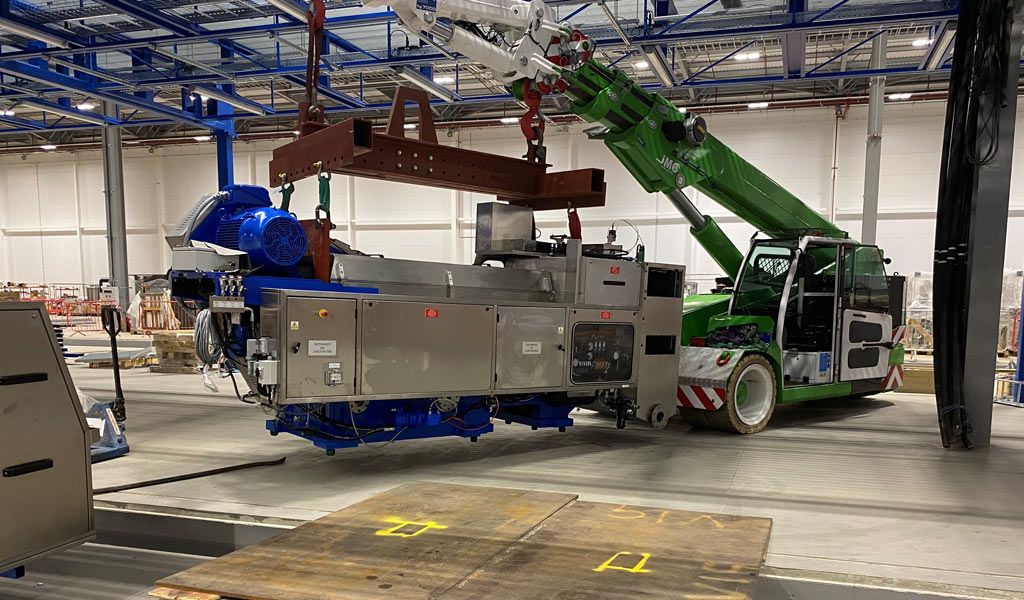
Moving a sixty‑tonne press brake or a fleet of CNC centres off an active shop floor is no longer simply a question of hiring a crane and renting warehouse space. Regulation, supply‑chain pressure and rising insurance thresholds have raised the bar for anyone tasked with parking capital equipment, whether for a fortnight between factory moves or for a year while a new line is commissioned.
Companies that attempt to “make do” with a vacant shed often discover too late that floor ratings, humidity, digital traceability or security measures fall short, risking damage that wipes out the savings of skipping a specialist.
The article below outlines the core factors clients must address and the service elements a competent provider should place on the table from day one. From knowing the actual footprint of what it is that you need to store, to understanding roughly what you’ll need to budget, the following should put you in good stead to find the right provider.
Know the true footprint
Machinery catalogues list length, width and height, but storage plans break down when nobody measures the “service envelope”. A five‑metre press fitted with guards can require eight metres to open fully for inspection; a moulding machine that seems modest on paper may need overhead clearance for an extraction gantry.
Add space for forklift paths and safe pedestrian walkways and the required square meterage often doubles. Before signing a lease, calculate both the static footprint and the radius each maintenance door, ram or chuck will travel during idle‑time servicing. A few extra minutes spent planning during these early stages will save you a lot of issues later on, by ensuring you get just as much storage space as you need – no more, no less.
Climate control: not optional for mixed‑material builds
Modern production assets combine steel frames with electronics, seals, rare‑earth magnets and sometimes composite beds. Below 40 per cent relative humidity, seals shrink; above 60 per cent, flash rust blooms on exposed metal with high iron contents.
Temperature cycling creates condensation that creeps into servo drives. Maintaining 45-55 per cent RH and a band of 14-20 °C rarely demands full HVAC, but it does require dehumidifiers, circulating fans, and calibrated sensors linked to a cloud log.
An insurer will ask to see those logs if a claim arises. Providers should install GSM‑linked monitors that push alerts to both the client and the warehouse manager the moment parameters drift outside of accepted limits.
Even if you only need to store your machinery for a short period of time, this isn’t something you can afford to cheap out on. High-carbon tool steel can rust incredibly quickly, and you risk potentially thousands in damage if you get it wrong.
Power provision during dormancy
Switching off mains feeds protects operators from unexpected starts, yet many OEMs advise energising heaters, PLC batteries and oil circulation pumps on a regular basis. The heavy machinery storage plan should allocate safe electrical points, lock‑out boards and routine runs verified by digital counters.
Failing to keep electronics live can void warranty claims on restart; courts have upheld OEM exclusions where users ignored intervals listed in the manual.
Security and access hierarchy
Machines that are left alone attract copper theft and unauthorised part‑stripping. An outer fence, CCTV and motion sensors deter casual intruders, but large solutions also require an access hierarchy: only named technicians open panel locks, and every entry triggers a timestamped record. Choose facilities that issue NFC or RFID tags tied to work orders, building a chain of custody that satisfies auditors and investors alike.
Transport interfaces: loading today shapes departure costs tomorrow
The same low‑loader that delivered the machine may not be available when it is time to move out. If a client downgrades the exit route by parking lighter assets along loading bays, a future uplift could need a smaller crane with more picks, adding thousands to the next phase.
An experienced storage partner leaves a clear lane with rated anchor points, confirms turning circles for semi‑low trailers, and pictures the exit as carefully as the arrival.
Make sure that you’re also upfront about your access requirements. If you’re not sure if you’ll need access before the end of the lease, but there’s even a slim chance, then let the storage provider know. They’ll likely make some adjustments to make this possible, and it only takes 30 seconds of communication on your side of things.
Insurance nuances
Standard contents policies might cap single‑item value at £250,000; one machining centre might exceed that figure twice over. Specialist storage cover sets higher per‑item and aggregate limits, plus extensions for dismantling, loading, transit and re‑installation.
Premiums fall when the facility demonstrates certified racking, humidity records and 24‑hour on‑site staff. Clients should demand sight of the provider’s declarations page and verify named issues, including floods if the warehouse sits near tidal zones.
A short checklist before choosing a storage partner
Limit yourself to one pass through this list; over‑specification costs more than it saves.
- Confirm floor loading certification and request a written engineer’s calculation.
- Ask to see live humidity data from the previous month.
- Verify that the insurance schedule names both dismantling and eventual re‑installation.
- Inspect anchor points and exit paths while the warehouse is empty.
- Ensure the contractor’s staff hold CPCS or equivalent tickets for every lifting method proposed.
Five checks – completed in an afternoon – remove most hidden costs and sleepless nights further down the line. It really doesn’t take much to cover your back.
Budget guide: what the market is charging
Prices differ by region, but three elements dominate. Storage space in a basic industrial shed runs at £8–£12 per square metre per week. Climate‑controlled zones add a little to that. Active maintenance (weekly energising, oil rolls, battery swaps) typically lands between £400 and £800 per machine per month.
Lift‑in and lift‑out charges depend on crane size, and any other materials and tools that may be required: a 60‑tonne mobile starts near £1,900 per day; a 350‑tonne all‑terrain deployed for a power‑press can exceed thousands, including ballast moves. If you use an experienced provider, you can rest assured that they’ll use the perfect tool for the job, not inadvertently going too small or too big and wasting your time or money.
Heavy‑machinery storage seems, at first glance, less technical than installation. In reality, every dormant month poses slow‑motion risks – floor failure, humidity creep, data‑logger gaps, insurance exclusions – that only surface when a production schedule depends on a machine returning to work. Treat storage as the first stage of redeployment, not the last step of removal.
Choose a provider prepared to sign off on loading calculations, climate logs, security hierarchy and customs data.